With its “Réserve” collection presented in April 2019, the Rhône cooperative group, which brings together 11 cellars of the southern Rhône Valley, continues its policy of adding value to its ranges. An update with Laurent Reinteau, managing director, who is leading this offensive strategy.
With Cellier 2020, the management team of the UVCDR (Union des Vignerons des Côtes du Rhône) began, a few years ago, a reflection aimed essentially at adding value to the group’s productions: the two big brands, Cellier des Dauphins and Vignerons de l’Enclave (appellation signatures covering more or less all the appellations of the Rhône Valley), not forgetting Boissy & Delaygues, a niche brand independent of the Cellier, which includes the estate Château de l’Estagnol in Tulette (Côtes-du-Rhône and Côtes-du-Rhône Villages) and the new estate the UVCDR has just acquired, Domaine de Galuval, 40 ha of vines, mainly in crus (Cairanne and Rasteau).
“This value-adding policy started well before my arrival,” stresses Laurent Reinteau, the current managing director, who spent most of his career in Champagne before taking up his post in 2017 at the UVCDR. “And it continues today with the stated ambition of adapting Cellier des Dauphins’ offer to the aspirations of new consumers.“
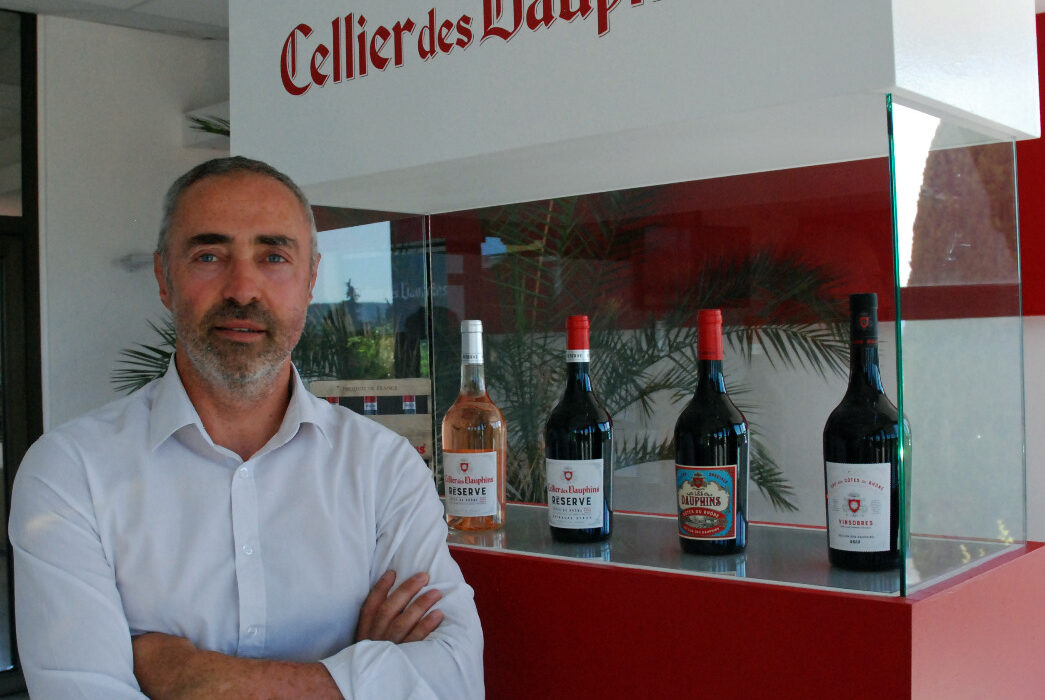
Hence the launch last April of a new collection called Réserve. “It was in fact a matter of re-allocating our ranges. We have of course kept Prestige, which is, if you will, the company’s cash cow [80% of sales in supermarkets]; and then we now have this new product line, Réserve, which comes from parcel selections.“
For these new cuvées, which give pride of place to Syrah, the idea is to bring freshness with sourcing more oriented towards the Préalpes (Vinsobres, Puyméras, Nyons) and a vinification described as more modern, with oxygen input and ageing in wood. The aim is to have very aromatic profiles, with a lot of sweetness and roundness. The first bottles of Côtes-du-Rhône labelled Réserve reached the shelves in April, with the Villages and crus to come.
On the rosé side, Cellier des Dauphins positioned itself strongly well before the fashion that attracts consumers today: it is even the leading producer in the Rhône Valley, since out of the roughly 130,000 hl of Côtes-du-Rhône rosé of the 2018 vintage, the Union with its cellars produces almost half. The UVCDR is not left behind on organic either. To meet demand, the ranges have been reviewed, with the launch this year of Origine bio by Cellier des Dauphins, a wine from parcel selections and vinifications that aim to truly convey the purity of the fruit.
“We are not in a race for volumes or supplies,” sums up Laurent Reinteau, “because with our 11 cellars, we manage perfectly to source our needs. The main challenge remains the success of the new cuvées, which must make it possible to add value to our winegrowers’ work.“
Jean Calabrese
KEY FACTS
1965: birth of the Union des Vignerons des Côtes du Rhône. Two years later, creation of the Cellier des Dauphins brand
11 cooperative cellars members to date (Nyons, Puyméras, Richerenches, Saint-Maurice-sur-Eygues, Saint-Pantaléon-les-Vignes, Sainte-Cécile-les-Vignes, Sérignan-du-Comtat, Suze-la-Rousse, Tulette, Valréas and Vinsobres)
12,500 ha of vineyard, 1,200 of them converted to organic
€90 million turnover in 2018