Master blender
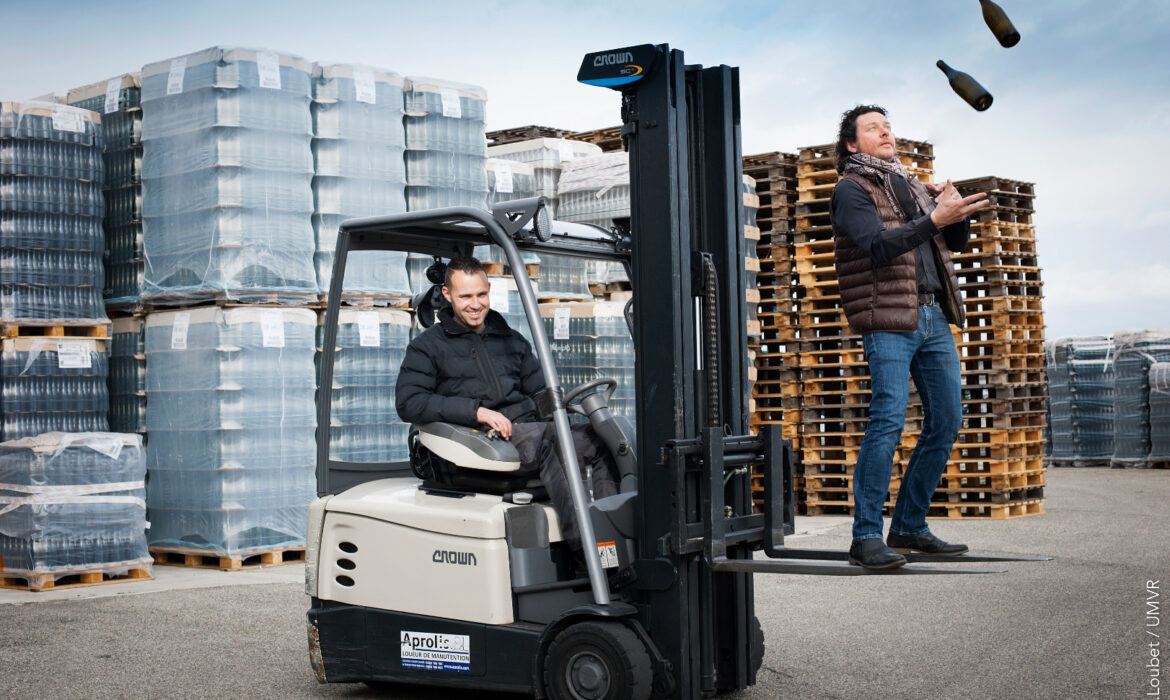
Samuel Montgermont describes himself as a blender: a blender of cuvées, terroirs and grape varieties. He is also a shaker-up of lines and of immobility…
An in situ strategy
He multiplies himself in order to put down deeper roots: a Cairannais in Cairanne, a Gigondassien in Gigondas, a Châteauneuvois in Châteauneuf-du-Pape. In each of these terroirs, Samuel Montgermont has created Grandes Serres wineries, located in the heart of the vineyards they vinify. First because he is convinced that tanker transport harms the quality of wine. And then to be close to the vineyard, to feel it, to understand it, to feel at home in it. “As long as I was not based in Gigondas, I had no access to the identity and image of a Gigondas négociant,” he says. The big difference between a Rhône winerie and an Anglo-Saxon winery lies in the importance of the terroir dimension in its work and philosophy.
A need to grow
Among the projects close to his heart is the creation of the first monopole in Châteauneuf-du-Pape with Clos Saint Patrice, planted before the Revolution. A monopole in the Burgundian sense of the term, that is, an identified, walled, legally protectable lieu-dit held by a single owner.
After the town hall and the land registry authorised the reclassification of the clos, the walls were rebuilt and the ambitions stated: to step up in status and reputation. Samuel knows very well the style of wine he wants and can make here: finer, more elegant juices, by applying lighter extractions and reintroducing stems to gain tension and structure. “Châteauneuf-du-Pape is a very fine appellation, but it has lost some of its supremacy. On restaurant wine lists just after the war, you had grand cru Châteauneuf-du-Pape, then premier cru Hermitage or Côte Rôtie. Châteauneuf was above. Today, it is below. What happened? We had a dip. If we move towards these notions of terroir classification, then we are talking in the big league.”
Shifting the lines
Another vineyard he is passionate about: Cairanne, a young cru that has to make its story a success. There he has set up a model that makes some people grumble: an unprecedented négociant/co-operator alliance, resulting in the pooling of the cooperative cellar with the Prefect’s agreement. The deal is simple: the co-operators keep all their freedom and allow Grandes Serres to use the pooled equipment. In exchange, the négociant brings his reading of the markets and his technical expertise. “When we started the project in 2014,” he recounts, “the cooperative’s winegrowers were paid €90 per hectolitre, when Cairanne was selling at 225. Catastrophic management. I don’t know whether I have succeeded or not; it is still a bit early. But what I can tell you is that at the end of the harvest, I saw people smiling. In our trade, as in many others, it is people who count. When you set people in motion, nothing stops them.”
Pulling upwards
Fifteen years ago, the winemakers of the Rhône Valley, that is, those who make their wine from bought-in grapes, could be counted on the fingers of both hands. Today there are more than sixty. “It is a new trade,” says Samuel Montgermont. “Production and cooperation should not be afraid of it. Let’s work together!” In the Rhône Valley, producers have forbidden themselves a classification into crus. The only thing that can be written is “cru des Côtes du Rhône”.
“But my American importer doesn’t want that,” says Samuel, “because his customer wouldn’t understand a cru being sold at €10. A Burgundy pinot noir sells for more than a Côtes du Rhône. Yet it is surely not as good. That is because before it there is a Gevrey-Chambertin, a Romanée-Conti. And the regional appellation follows. If we pull this notion of Rhône Valley cru upwards, we will all win.”